Nobody's Learning Your Conlang (And That's Fine): What Fictional Languages Are Actually For
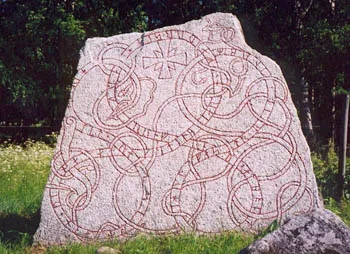
Photo: Unknown, CC BY-SA 3.0, via Wikimedia Commons
Let's start with an uncomfortable truth for the conlang community: the graveyard of invented languages is vast, and it is mostly full of extremely well-crafted corpses.
Thousands of fictional languages have been created over the past century. Complete grammars. Phonological rules. Verb conjugations mapped with academic rigor that would make a grad student weep. And almost all of them are dead on arrival — learned by nobody, remembered by nobody, mourned by nobody.
Then there's Klingon, which has more speakers today than some real languages. There's Dothraki and High Valyrian, which spawned genuine fan communities. There's Tolkien's Elvish, the granddaddy of them all, which people have named their children after.
What separates the survivors from the casualties? I'd argue it's almost never what the creators think it is.
Rigor Isn't the Secret. You're Not Going to Like This.
The tempting explanation is quality. Tolkien was a philologist, so of course his languages work. David J. Peterson built Dothraki with real linguistic methodology, so of course it took off.
But that story doesn't hold up. There are languages in obscure fantasy novels with grammars just as rigorous as Klingon's, and nobody can order a beer in them. Meanwhile, pig-Italian gibberish in a video game sometimes sticks in players' heads for decades.
Here's the actual pattern: a fictional language succeeds when it gives fans something to do that they couldn't do otherwise. Klingon speakers aren't in it for the ergative alignment — they're in it for the identity. Saying "today I am a Klingon" at a convention is a social act. The language is a membership card.
Elvish worked for a different reason: romance. Tolkien tied his languages to poetry, to longing, to a beautiful doomed world. Fans learned a phrase or two not to communicate but to feel connected to something gorgeous. That's emotional utility, not linguistic utility.
The Dictionary Trap
Which brings me to the advice I'd tattoo on every worldbuilder's desk: if you're building a dictionary before you've built a story, you're building a museum, not a language.
I've watched this mistake happen in writing communities over and over. Someone spends two years on a 4,000-word lexicon, then tries to wedge a novel around it. The result reads like a textbook wearing a trench coat. Readers can smell it. Language in fiction should feel like an iceberg — a few evocative words above the surface, the mass of it implied below.
The most effective use of invented language is often tiny. A curse word. A term of endearment. A word that has no English translation because the culture needed one. One well-placed untranslatable word does more worldbuilding than forty pages of grammar.
So Should You Bother?
Yes — but know what your language is for. If it exists to signal depth, you need maybe a hundred words and consistent sounds. If you're genuinely hoping fans will adopt it, then understand you're not building a language anymore. You're building a culture around a language, and a reason for strangers to want to belong to it.
Tolkien didn't set out to be learned. He set out to make English readers feel homesick for a place that never existed. The language was the vehicle for the ache.
That's the whole trick. Nobody learns a language because it's well-constructed. They learn it because it lets them say something to each other that English can't. Usually what they're saying is: we were both there.