The Sky Knows First: Why a Fictional World's Weather Spills All Its Secrets
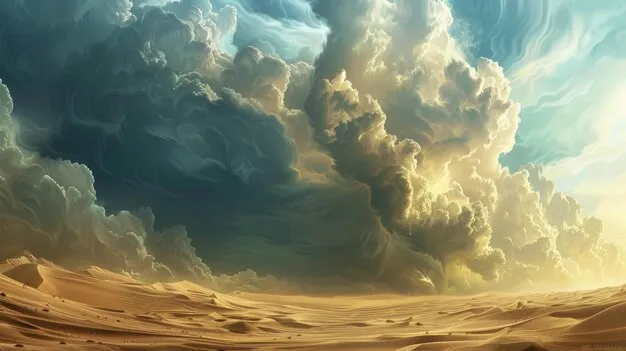
Photo: dramatic storm clouds over fantasy landscape, via img.freepik.com
Ask someone to describe their favorite fictional world and they'll start with the map. The Shire, west of the Brandywine. Westeros, from the Wall down to Dorne. But push them a little — ask what the world actually feels like — and something interesting happens. They start talking about the sky.
That's not an accident. Weather is the most underrated tool in the worldbuilder's kit, and the best fictional realms treat it like a character with its own arc, its own moods, its own opinions about the plot.
Climate Is Character Development
Think about how much work a single weather choice can do. Endless rain in a noir city isn't just atmosphere — it's a moral statement. The streets stay slick, the secrets stay washed, the whole population hunches under an unspoken gloom. Swap that same city to permanent sunshine and suddenly it's a different story entirely, maybe a horror story about what thrives in the light.
George R.R. Martin understood this better than almost anyone. The looming threat in Westeros isn't an army or a dragon at first — it's a slogan. Winter is coming. The entire political culture of the North, the saying of the Starks, the dread that hangs over every summer feast — all of it flows from a climate cycle measured in years. The weather is the plot.
Meanwhile, over in Middle-earth, Tolkien does something subtler. Mordor's sky is a choked, sulfurous ceiling — you can't see the stars, which matters enormously in a world where stars are literally woven into mythology. The weather tells you who has hope before anyone opens their mouth.
Seasons as Social Engineering
Here's where it gets fun for the worldbuilders in the room: climate doesn't just set a mood, it builds cultures. A world with a harvest season has festivals. A world with monsoons has architecture on stilts, gods of the flood, proverbs about patience. A world where winter kills a third of the population every cycle? That's a world with brutal inheritance customs and a very practical attitude toward the elderly.
The best creators reverse-engineer from the sky down. Ask: what does a nine-year winter do to a wedding calendar? To a grain economy? To folklore? Suddenly your weather isn't set dressing — it's the reason your characters' grandparents act the way they do.
The Sky as a Lie Detector
There's also a diagnostic use here that too many writers skip. A world's weather is a consistency check. If your desert kingdom has a thriving port city, somebody needs to explain the water. If your frozen tundra feeds a million-person capital, the math better work. Readers might not articulate why a world feels fake, but nine times out of ten it's because the climate and the culture stopped talking to each other.
So before you finalize the map, write the weather report. One paragraph: what's the sky doing today, what did it do last month, and what does everyone in that tavern complain about? If you can answer that, your world already feels more alive than most.
The sky shows up on page one and never leaves. It's the only character guaranteed to be in every scene. It deserves a backstory.