When the Fans Take Over: The Complicated Beauty of Loving a World More Than Its Creator
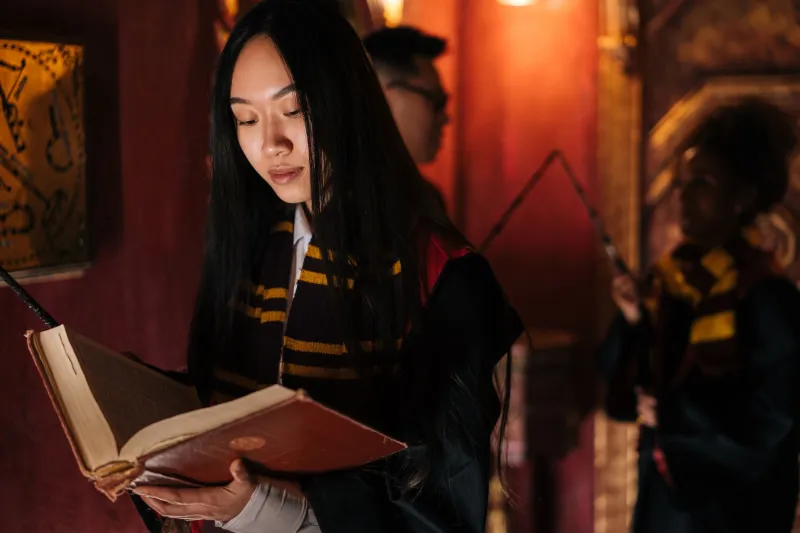
At some point in the life of every truly beloved fictional world, something shifts. The creator is still technically in charge — still writing the books, still running the writers' room, still the name on the copyright. But the world itself has started to belong to someone else. Or rather, to a lot of someone elses, scattered across forums and Tumblr threads and Archive of Our Own, writing stories the original author never imagined, filling gaps the original narrative left open, and occasionally building something that feels, to the people who read it, more satisfying than the source material.
This is one of the stranger and more interesting phenomena in modern storytelling culture. And it raises a question that doesn't have a clean answer: when a fan community rewrites a fictional world, who does that world belong to?
The Gap Between What's Written and What's Felt
Fan creativity doesn't usually start from nothing. It starts from a specific kind of frustration — the feeling that the world being offered isn't quite the world you experienced while reading or watching. The characters you fell in love with don't get enough page time. The relationship you were certain was being built never arrives. The corner of the world that fascinated you most gets one chapter and then disappears.
This gap between the story on the page and the story in your head is where fan fiction lives. And it's worth noting that this gap is often a sign of quality, not failure. You only feel compelled to extend a world when you care about it enough to want more. Nobody writes fan fiction about a story that left them indifferent.
The Harry Potter fandom is probably the most documented example of this dynamic in American pop culture. Long before J.K. Rowling's public statements created a different kind of conversation around the franchise, the fan community had already built an enormous parallel Hogwarts — one that was more diverse, more emotionally complex, and in many ways more internally consistent than the original. The world Rowling created was the seed. The world the fandom grew was something else entirely.
Headcanon as a Creative Act
Headcanon — the personal interpretations fans hold as true even when they're not supported by official text — is often dismissed as wishful thinking. That undersells what's actually happening. When a fan decides that a particular character's behavior across five books is best explained by a specific backstory the author never wrote, they're doing genuine analytical and creative work. They're reading the text closely enough to find a coherent interpretation, then extrapolating it into something new.
Some of the most interesting headcanons aren't additions to a story — they're corrections. They identify an inconsistency in the official narrative and resolve it in a way that feels more true to the characters than what the author actually wrote. This is the fan community functioning as a kind of distributed editor, and it's more common than creators probably like to admit.
The Good Omens fandom did something remarkable with Neil Gaiman and Terry Pratchett's source material. The novel's central relationship between Aziraphale and Crowley was warm and suggestive but deliberately ambiguous. Fan communities, particularly on Tumblr and AO3, developed an interpretation of that relationship so specific and emotionally detailed that when the Amazon adaptation arrived — with Gaiman's direct involvement — it felt, to many viewers, like the show was confirming what the fandom had known all along. The fans hadn't just interpreted the world. They'd helped define what it meant.
When Fan Love Reshapes Official Narrative
This isn't always a comfortable process for creators. There are well-documented cases of fan interpretations becoming so dominant that they create genuine tension with authorial intent. When a creator's vision for a character conflicts with the version thousands of fans have been loving for years, the resulting friction can be genuinely ugly.
The Supernatural fandom's relationship with its own show became one of the most analyzed creator-audience dynamics in recent television history. Fan communities developed deep investments in specific character relationships and story directions that the show's writers were sometimes aware of, sometimes indifferent to, and occasionally actively resistant to. The show's final season became a flashpoint — not just for the specific choices made, but for what those choices revealed about the gap between the story the writers thought they were telling and the story the audience had been experiencing.
What makes this complicated is that neither side is entirely wrong. The creators have a right to tell the story they intend. The audience has a legitimate relationship with the world they've been living in for years. These two things can be genuinely incompatible, and there's no clean resolution.
The Legacy Question
Here's where things get philosophically interesting: in the long run, which version of a fictional world survives? The official one, or the one the fans built?
For some worlds, the answer is clearly the official canon. But for others — particularly ones where the official story ended badly, or where the creator made choices that alienated a significant portion of the audience — the fan version has a real shot at becoming the culturally dominant one. Decades from now, the Supernatural that people remember and celebrate might look more like the version the fan community constructed than the version that aired.
This isn't a new phenomenon, exactly. Sherlock Holmes has been reinterpreted so many times that Doyle's original version is almost one interpretation among many. Dracula has been reimagined so thoroughly that Stoker's specific vision is now a historical artifact rather than the definitive text. The fandom, in a very real sense, absorbed those worlds and kept building.
What This Means for Creators
For anyone building a world with the hope that it will matter to people, the fan dynamic is worth thinking about early. The worlds that inspire the most creative engagement tend to be ones with genuine gaps — not plot holes, but deliberate or accidental spaces where the audience can project their own meaning. A world that explains everything leaves nothing for the reader to build.
The most enduring fictional universes aren't the ones that were most perfectly controlled. They're the ones that were most generously open — the ones that gave audiences enough to love and enough room to make it their own.
That might be the highest compliment a fictional world can receive: not that it was perfectly executed, but that people cared enough to keep building it long after the creator put down the pen.