Lost in Translation: What Happens to a Fictional World When the Camera Shows Up
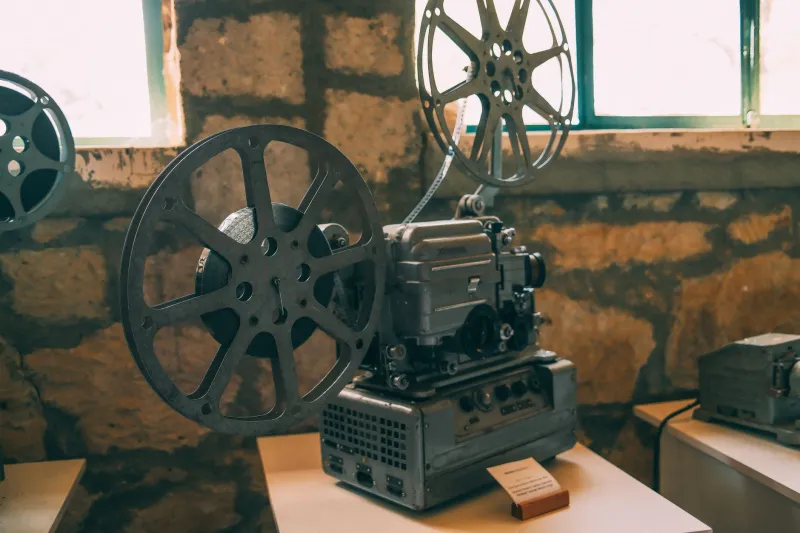
There's a specific kind of disappointment that only book lovers know. The trailer drops. The production looks expensive. The casting is fine, maybe even great. And yet, the moment you see that world rendered in full color on a screen, something feels quietly, unmistakably off. Not broken, exactly. Just... hollowed out.
This isn't a coincidence, and it's not just nostalgia talking. It's a fundamental tension built into the way fictional worlds actually work — and understanding it says a lot about what makes worldbuilding powerful in the first place.
The Invisible Architecture of a Written World
When a novelist describes a marketplace in a fantasy city, they're not really describing a marketplace. They're dropping a handful of carefully chosen details — the sour smell of fermenting grain, the way a merchant's accent clips certain vowels, the particular weight of humid air before a storm — and trusting your brain to construct the rest. Readers don't passively receive a world. They build it, collaboratively, using the author's cues as scaffolding.
This is the secret engine of immersive fiction. The gaps aren't bugs. They're features. Your imagination, filling in everything the author left unspecified, naturally produces a version of the world tuned to your own sensory memory and emotional register. The marketplace smells exactly as evocative as your brain needs it to. The protagonist's hometown feels exactly as melancholy or as warm as the prose nudged you toward — no more, no less.
Film doesn't get to do that. Film has to show you the marketplace. Every cobblestone, every merchant's face, every costume choice is a committed answer to a question the book deliberately left open. And the moment those answers appear on screen, they start overwriting the version you built in your head.
When the Camera Gets It Right
None of this means adaptation is doomed — it just means the challenge is genuinely hard, and the filmmakers who clear it deserve serious credit.
Peter Jackson's The Lord of the Rings trilogy remains the gold standard for a reason. Tolkien's Middle-earth is famously dense with sensory specificity — the texture of hobbit-hole interiors, the particular quality of light in Lothlórien, the way Mordor's ash-choked air should feel like it costs something to breathe. Jackson's team didn't try to replicate the books' imagery literally. Instead, they identified the emotional texture of each location and built toward that. The Shire doesn't just look green and round and cozy — it radiates a kind of saturated, almost edible warmth that matches exactly what Tolkien's prose was reaching for. The sensory gap got bridged because the production understood that fidelity to feeling matters more than fidelity to description.
Similarly, Denis Villeneuve's Dune (2021) managed something remarkable with a novel that many considered unfilmable. Herbert's Arrakis is built on sensory contradiction — a planet that is simultaneously brutal and sacred, where water is precious enough to cry over and the spice smells like cinnamon mixed with something older and stranger. Villeneuve leaned into abstraction and scale, using sound design and cinematography to manufacture a physical weight that matched the book's almost spiritual heaviness. He didn't explain Arrakis. He made you feel the heat of it.
When It Falls Apart
For every adaptation that threads the needle, there are several that don't — and the failures are usually instructive.
The HBO adaptation of His Dark Materials is a useful case study. Philip Pullman's trilogy is saturated with a very specific sensory atmosphere: gas-lit streets, the smell of coal smoke and river mud, the tactile warmth of a daemon's fur. The show looks polished and clearly had a serious budget behind it. But the production design skews toward a clean, almost corporate aesthetic that drains the books' grimy, lived-in magic. Lyra's Oxford should feel like it has centuries of grime baked into its stones. On screen, it mostly looks like a very nice set.
The original Eragon film from 2006 is an even starker example. Christopher Paolini's novel, whatever its literary limitations, has a strong sensory identity — the cold bite of mountain air, the physical exhaustion of dragon riding, the particular roughness of a farm boy's hands. The film rushed past all of that texture in its sprint toward plot, leaving a world that looked like fantasy without feeling like any particular fantasy.
What Makes a World Screen-Proof
So what separates the worlds that survive the jump from the ones that don't?
Partly it's about how the world's sensory identity is distributed in the source material. Worlds that build their atmosphere through recurring, layered details — smells, temperatures, textures that come up again and again in slightly different contexts — give adapters more to work with. There's a pattern to reverse-engineer. Worlds that rely on a single iconic image or a few stand-out set pieces are more fragile, because once those specific images are committed to film, there's nowhere left to go.
But the bigger factor might be emotional coherence. The best fictional worlds aren't just visually distinctive — they have a consistent emotional register that runs through every sensory detail. Arrakis doesn't just look harsh; it feels like a place that demands something from you. The Shire doesn't just look comfortable; it radiates a specific kind of safety that makes leaving it feel like genuine loss. When a production team can identify and commit to that emotional throughline, the sensory details they invent for the screen start to feel like they belong.
When they can't — or when studio pressure, budget constraints, or simple creative miscommunication gets in the way — you end up with a world that looks like the book and feels like something else entirely.
The Reader's Revenge
Here's the thing, though: even the best adaptations can't fully replace what you built in your head. And maybe that's okay. The version of Hogwarts or Earthsea or the Broken Empire that lives in your imagination is, in a very real sense, yours. You co-authored it, panel by panel, with every page you read.
Film can offer a stunning, shared interpretation of a world. It can capture the mood, the weight, the visual poetry of a place. What it can't do is reach into your specific sensory memory and pull out exactly the right detail at exactly the right moment.
That gap — between what the page invites you to imagine and what the screen decides to show you — isn't a flaw in either medium. It's just proof that the two are doing fundamentally different things. And the worlds we love most are the ones rich enough to survive the translation, even if something always gets left behind.