Somebody in That Castle Is Worried About Rent: The Case for Broke Fantasy Worlds
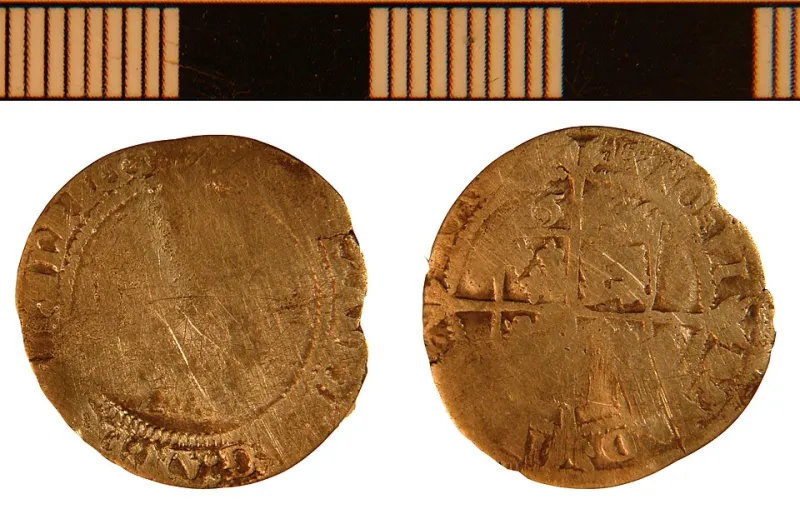
Photo: North Lincolnshire Museum, Martin Foreman, 2013-01-02 16:23:49, CC BY-SA 2.0, via Wikimedia Commons
Here's a party trick for your next book club: pick any fantasy novel off the shelf and ask one simple question — who cleans the stables, and what do they get paid?
If the author can't answer that, the world will eventually crack. Not in chapter one, maybe not even in chapter ten, but somewhere along the way, the seams will show. Because economies are the load-bearing walls of worldbuilding. Nobody compliments them when they work, but everybody feels the wobble when they don't.
Money Is Just Trust With a Face
Currency is one of the oldest tricks in the fantasy toolbox, and it works because it does double duty. A gold coin isn't just a game mechanic — it's a tiny artifact of culture. What's stamped on it? Whose face? Whose promise backs it?
Think about how much worldbuilding gets done in a single detail like a debased silver piece circulating in a war-torn province. Suddenly you know there's a mint, a ruler, a war, a shortage, and a black market — all before anyone draws a sword. That's the magic of economic detail: it's exposition disguised as a shopping scene.
The best practitioners understand this instinctively. When a tavern keeper in a well-built world grumbles about grain prices after a bad harvest, that grumble is doing more narrative work than a page of backstory ever could.
The Guild Bounty Problem
Let's talk about the elephant in the dungeon: adventurer economies. A classic genre setup — guild halls, bounty boards, quests that pay out in coin — is also one of the most commonly botched. Do the math on almost any such world and you'll find that a single dungeon crawl pays enough to buy the tavern, the tavern's building, and the tavern keeper's retirement.
So why does anyone farm?
Some stories lean into this and make it the point. If your heroes can earn a fortune by violence, your world had better be one where violence is common, monsters are a genuine civic threat, and someone powerful has a very good reason to fund mercenaries. That's not a plot hole waiting to happen — that's a whole political system waiting to be explored.
The fix is rarely lowering the reward. It's raising the cost. Gear, repairs, taxes, guild dues, healing, bail money. A hero who's rich at the end of every chapter is a hero with no stakes.
Trade Routes Are Plot Routes
Nothing generates conflict faster than scarcity, and nothing creates scarcity like geography. The moment you decide that the mountain passes close for winter, or that one harbor controls the spice trade, or that a freight monopoly owns the only jump lanes between colonies, you've built a story engine that runs on its own.
Space opera figured this out early. The great galactic empires of the genre aren't interesting because of their star destroyers — they're interesting because they control shipping. Blockades, smuggling, tariffs, pirated cargo. Every one of those words is a plot, and every one of them is economics wearing a costume.
Even a small detail works wonders. A world where coffee is a luxury import instantly tells you about its climate, its shipping lanes, and its class divides — and it gives your American readers a sympathetic shudder of recognition. Take away our coffee and we'd riot too.
What Readers Can Smell
Audiences don't need to run spreadsheets on your fictional economy. But they have finely tuned instincts for fairness and logic, and a world where nobody seems to work, eat, or worry reads like a stage set with no rooms behind the doors.
The tell is usually simple: everyone important has money, and nobody explains how. Kings are rich because kings are rich. There's no taxation, no debt, no scarcity, no one haggling in the market. It's a world of set dressing rather than a world of people.
The antidote is one honest question asked repeatedly: where does the food come from, and who gets paid along the way? Answer that three or four times and your world suddenly has farmers, merchants, roads, and grudges. Congratulations — you've built a place instead of a backdrop.
Broke Is Believable
There's a reason the most beloved fictional worlds are full of people who are broke, taxed, indebted, or scheming for their next meal. Scarcity is the great leveler. It gives every character — from the stable boy to the archmage — a reason to want something, and wanting things is what stories are made of.
So before you polish your magic system or name another moon, do the unglamorous work. Set a wage. Pick a currency. Decide who's starving and who's hoarding. Your readers may never notice the ledger underneath your story.
But they'll feel it. Every time a character buys a round of drinks, haggles over a horse, or can't quite afford the healer — they'll feel it. And they'll believe you.